Seasonal Tree Care Checklist Roanoke, Texas Homeowners
Healthy trees add shade, character, and value to Roanoke properties, but they also need attention through every season. Whether you handle light maintenance yourself or consult a tree service Roanoke homeowners can use a simple seasonal routine to notice changes before they become larger health or safety concerns.
North Texas Tree Care Checklist must cope with intense summer heat, dry spells, heavy rain, wind, sudden cold snaps, compacted soil, and construction activity. Maintaining Regular Veterinary Appointments A year-round plan centered on inspection, watering, mulch, and thoughtful pruning gives established trees a better chance to respond to those stresses.
Key Takeaways
- Tree care is most effective when it is handled as a seasonal routine.
- Deep watering, proper mulch, and careful pruning support healthier root systems and canopies.
- Heat, drought, storms, pests, and disease can create similar-looking symptoms.
- Cracks, new leaning, lifted roots, and hanging limbs deserve prompt attention.
- Large limbs, utility-line conflicts, and unstable trees are not suitable do-it-yourself projects.
Why Roanoke Trees Need Seasonal Care
Tree problems rarely begin with one obvious event. Dry soil can reduce vigor, saturated ground can weaken root support, and wind can expose weak branch connections. The Texas climate can compound those pressures, which is why the tree health guidance for Texas homeowners recommends looking at leaves, branches, trunks, roots, and surrounding soil when investigating a concern.
A full green canopy is encouraging, but it does not guarantee that a tree is structurally sound. Decay can occur inside a limb or trunk, roots can be damaged below ground, and a narrow branch union can become more vulnerable as branches gain weight. Seasonal checks make it easier to compare a tree with its usual appearance.
Winter: Inspect Structure and Protect Roots
When deciduous trees lose leaves, their branch structure becomes easier to see. Walk around each tree from a safe distance and look for dead or hanging limbs, cracks where large branches meet, loose bark, fresh leaning, cavities, or fungal growth near the base of the trunk. Photograph anything new so changes can be tracked.
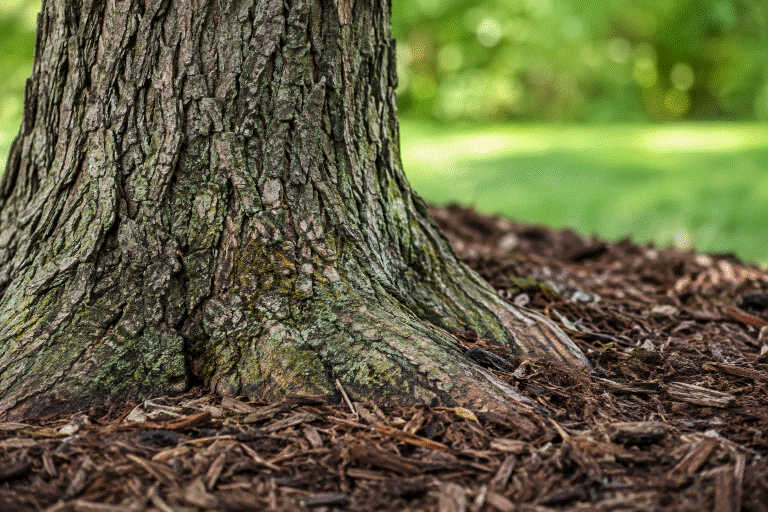
Keep lawn equipment, piled soil, and mulch away from the trunk. A moderate layer of organic mulch over the root zone can help moderate soil conditions, but it should not touch the bark. Avoid volcano-shaped mulch piles, which hold moisture against the trunk and hide potential problems.
Spring: Watch New Growth and Disease Signs
Spring is the time to compare new growth across the canopy. Delayed leafing, sparse growth on one side, dead branch tips, unusual leaf spotting, or repeated dieback may indicate stress, pests, disease, or root issues. One symptom alone is not enough to diagnose a tree, so avoid applying products based only on an online image.
Identify the species before pruning. Oaks deserve particular care because fresh wounds can increase the risk of oak wilt. Current oak pruning guidance in Texas advises avoiding nonessential pruning and wounding of oaks from February through June, while addressing urgent safety hazards as needed.
Summer: Manage Heat, Water, and Soil Stress
Frequent, shallow lawn watering may not reach much of a mature tree’s active root zone. Instead, water slowly enough for moisture to soak into the soil, spreading it across the area beneath and beyond the canopy rather than concentrating it at the trunk. Check soil conditions first, adjust after meaningful rain, and follow local watering restrictions.
Brown leaf edges, premature leaf drop, thinning foliage, wilting during mild weather, and dead twig tips can all be signs of heat or moisture stress. Mulch helps slow evaporation and moderates surface soil temperatures, but it cannot correct compacted soil, root injury, or chronic overwatering. If water pools or runs off, reduce the flow rate and allow more time for absorption.
Fall: Prepare for Storms and Dormancy
Before seasonal wind, heavy rain, or freezing conditions arrive, inspect trees near driveways, roofs, sidewalks, play areas, and parked vehicles. Deadwood, rubbing branches, and weak-looking branch unions are easier to address before a storm turns them into an immediate hazard.
Clear weeds, dense ground cover, and debris away from the trunk flare without disturbing the roots. Fall is also a useful time to create a basic tree inventory. Record each tree’s species, general location, photos, and notes about prior storm damage, pruning, or recurring symptoms.
Pruning: What Homeowners Can Handle
Homeowners may be able to remove a small, dead, reachable branch with clean, sharp hand tools. Make cuts just outside the branch collar, which is the slightly enlarged area where the branch joins larger wood. Do not leave long stubs, tear bark, or cut flush against the trunk.
Leave large limbs, overhead work, chainsaw work, branches near utility lines, and storm-damaged trees to trained professionals. Do not top a tree by cutting back major upright stems indiscriminately. Topping can leave large wounds and encourage weak new shoots, creating another maintenance problem later.
Watering and Mulching Basics
- Check whether the soil is actually dry before watering.
- Apply water slowly so it can move into the root zone.
- Water broadly under the canopy rather than only beside the trunk.
- Use an even layer of organic mulch over bare soil where practical.
- Keep mulch several inches away from the trunk.
- Reassess after heavy rain, extreme heat, drainage changes, or construction nearby.
How to Spot Pests and Disease Early
Look beyond leaves. Inspect bark for peeling or cracks, branches for holes or sawdust-like material, and the ground for mushrooms, soil heaving, or exposed roots. Pests and diseases can be involved, but drought, mechanical injury, poor drainage, and natural aging can create similar symptoms. Dated photos from the same viewing angle are useful when seeking an assessment.
When a Tree Becomes a Safety Concern
Act quickly if a major limb or trunk has a visible crack, a tree suddenly leans toward a structure, roots are lifting from the soil, or large dead branches hang above areas people use. Keep people, pets, and vehicles out of the potential fall zone. Branches resting on utility lines should be reported to the utility provider rather than handled directly.
A tree can have a health issue without presenting immediate danger, and a tree can pose a risk even while its leaves appear healthy. After a storm, prioritize stabilization and safety over cosmetic cleanup.
A Simple 2026 Tree Care Calendar
- Winter: Review branch structure, inspect for storm damage, and protect exposed root areas.
- Spring: Monitor leaf-out, document unusual symptoms, and avoid unnecessary oak pruning.
- Summer: Check soil moisture, water slowly and broadly, and watch for heat stress.
- Fall: Inspect for hazards, update tree records, and prepare for changing weather.
Common Questions From Homeowners
How often should trees be inspected?
A brief inspection once each season is a practical baseline, with additional checks after severe storms, prolonged dry weather, nearby construction, or noticeable changes in the canopy.
Should every tree be fertilized?
No. Fertilizer is not a substitute for appropriate watering, healthy soil, or sound structure. A tree with root damage, poor drainage, or disease may not improve simply because fertilizer is added.
Can brown leaves recover?
Damaged leaf tissue will not turn green again, but the tree may produce healthy future growth if the underlying stress is corrected. Dead branches, however, do not regain living tissue.
When is removal the only safe option?
Removal may be necessary when severe decay, major trunk splits, root failure, or structural damage cannot be reduced to an acceptable level through pruning or other management.
Final Checklist for Property Owners
- Inspect trees four times a year.
- Water according to soil conditions instead of a fixed schedule alone.
- Keep mulch away from trunks.
- Document changes with photos.
- Handle only small, reachable pruning tasks.
- Respond promptly to cracks, leaning, lifted roots, and hanging limbs.
Conclusion
Tree care in Roanoke does not need to be complicated, but it does need to be consistent. By inspecting trees seasonally, watering thoughtfully, using mulch correctly, pruning with restraint, and responding early to warning signs, homeowners can make better decisions for their trees and their property throughout.